The foldable war just took a disastrous turn.
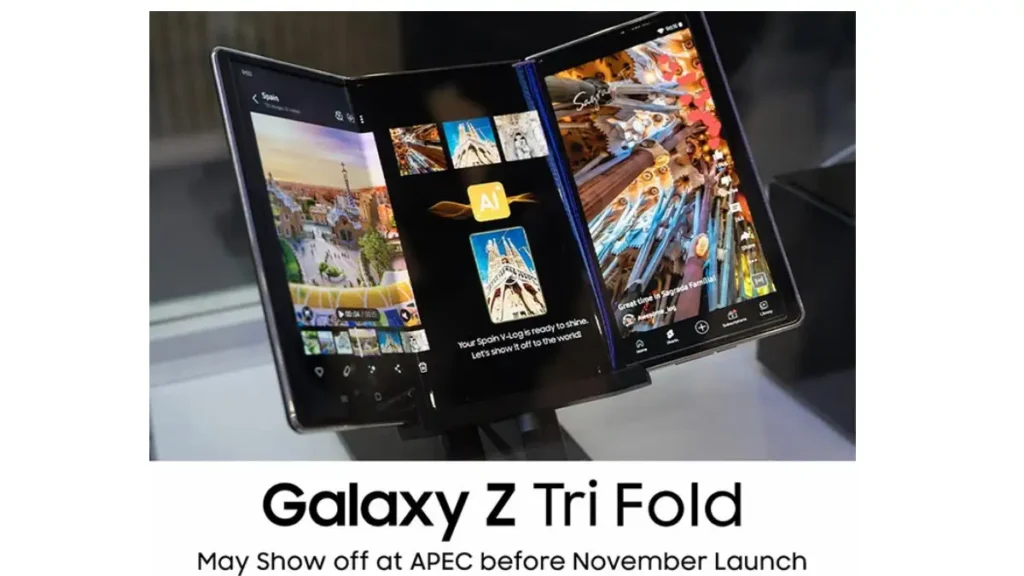
Samsung, the undisputed king of the foldable phone market, has officially pulled the curtain back on the Galaxy Z TriFold—a radical, triple-folding smartphone. Revealed during a major CEO summit, this device is Samsung’s nuclear option: transforming from a standard 6.2-inch phone into a 10-inch tablet-sized display.
But the excitement is a thin veil over a fundamental problem: Samsung is racing a technology that nobody can perfect, and they are asking consumers to pay a sky-high price—likely over $2,500—for a device that introduces three times the number of critical failure points.
The TriFold is technically groundbreaking, yes, but it’s a massively over-engineered solution to a problem that folding phones haven’t even solved yet: durability. Let’s break down the impossible tech, the massive price tag, and why the TriFold might be the most fragile, expensive gimmick ever launched 👇
📐 The Hardware Hype: Three Panels, One Massive Risk
The Z TriFold moves beyond the simple dual-panel fold of the Z Fold series, introducing a Z-shaped dual-hinge design that allows it to fold inward from both sides. This is the headline feature, but it’s also the fundamental hardware risk.
🔪 The Third Hinge of Doom
The triple-folding mechanism is a masterpiece of engineering, but it multiplies the potential points of failure by three:
- Hinge Integrity: Folding the device twice places unprecedented mechanical stress on the flexible display panels and two hinges. Samsung has struggled with dust, creases, and water resistance on single hinges—a dual-hinge design is a durability nightmare waiting to happen.
- The Gutter Problem: The presence of two internal folding lines guarantees two deep creases in the central viewing area, further diminishing the “seamless tablet” experience it promises.
When unfolded, the device delivers a 10-inch AMOLED display, perfect for multitasking and media consumption. But achieving this functionality requires compromising the very durability that consumers demand at this price tier.
🧠 Flagship Power, Fragile Build
The rumored internal specs confirm this is a top-tier flagship, designed to process data without issue, no matter how much you fear folding it:
- Processor: Expected to feature the Snapdragon 8 Gen 3 or Elite chipset.
- Memory/Storage: Up to 16GB RAM and 1TB storage.
- Camera System: Tipped to feature a monstrous 200MP triple-camera system.
Samsung is throwing every possible component at the device, hoping raw power distracts from the core hardware vulnerability.
💸 The Financial Folly: The $2,500+ Gimmick
Folding phones already demand a serious financial premium. The triple-folding technology will shatter the price ceiling, making this a niche product reserved only for the wealthiest early adopters.
💰 The Luxury Tax
The original Z Fold models pushed past the $1,800 mark. The TriFold—with its complex hinge, specialized display, and advanced camera system—is projected to be positioned as an even more premium flagship.
- Expected Price: Industry insiders are confident the TriFold will cost well over $2,500, placing it in the territory of the Apple Vision Pro and the Cadillac Celestiq in terms of relative absurdity.
- Target Audience: The TriFold clearly targets high-end professionals and enthusiasts who prioritize utility and innovation over price, but that demographic is notoriously small.
Samsung is betting that its status as a market pioneer is enough to justify a price tag that screams “experimental prototype.”
📉 Killing the “Standard” Foldable
The mere existence of the TriFold immediately devalues the dual-folding Galaxy Z Fold series. Why would a user purchase a Fold 6 when the market leader has already declared that form factor obsolete with its own innovation?
Samsung is not just outpacing rivals like Huawei and Xiaomi; it’s cannibalizing its own successful product line to chase a fleeting title.
🌍 Ecosystem: One UI Optimized for… What?
The final question mark hangs over the software. Samsung promises an optimized One UI for foldable workflows, leveraging the 10-inch screen for multitasking.
- Multitasking: The larger, tablet-like display is perfect for multi-window multitasking and S Pen support.
- The AI Core: The device will be fully integrated with Galaxy AI features, ensuring the massive screen is maximized by on-device intelligence.
However, the usefulness of the 10-inch screen will constantly be at war with the unfold/refold friction and the inevitable display crease frustration that comes with triple-folding.
💬 Final Thoughts — A Flawed Masterpiece
The Samsung Galaxy Z TriFold is a stunning technical achievement that deserves applause for its sheer audacity. It represents the pinnacle of flexible display engineering.
But it is also the physical manifestation of the foldable market’s fundamental flaws: it’s too fragile, too expensive, and too complex for its own good. Samsung is showcasing a technological feat that most users are still unwilling to pay for, especially when it means tripling the chance of a critical hardware failure.
The TriFold is a technological masterpiece, but in 2026, the marketplace will reward durability and value over a third folding screen. This is a gimmick in a premium casing.

Pravin is a tech enthusiast and Salesforce developer with deep expertise in AI, mobile gadgets, coding, and automotive technology. At Thoughtsverser, he shares practical insights and research-driven content on the latest tech and innovations shaping our world.