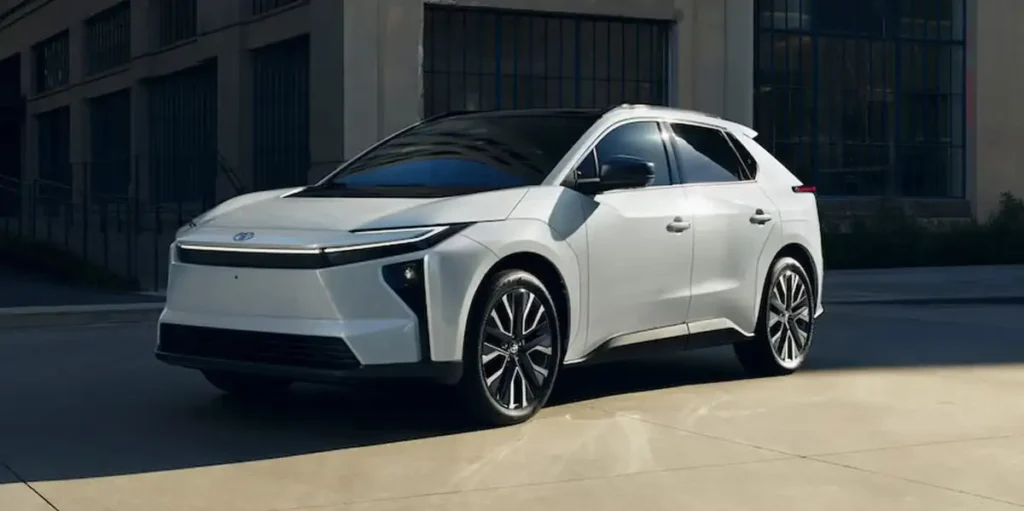
The 2025 Nissan Leaf — the OG of the EV world — is back, and this time it’s more than just a facelift. It’s sleeker, sportier, and smarter, built for a world where electric cars are the new normal. From its aerodynamic body to impressive range and pricing, the Leaf feels reborn.
Exterior Design and Aerodynamics
Forget the quirky eco-hatch look — the new Nissan Leaf review shows off a modern, coupe-like profile with aerodynamic efficiency at its core. Sharing its platform with the Renault Scenic and Nissan Ariya, the Leaf now measures 4.35 meters long — directly rivaling the VW ID.3, Kia EV3, and Škoda Elroq.
Design upgrades include active grille shutters, a fully flat underbody, and new aero wheels that reduce drag. Even the illuminated front badge adds flair and efficiency.
The best part? The new Leaf will be built entirely in Sunderland, UK, including its battery and motor — meaning it qualifies for the full £3,750 EV grant.

Battery Options and Range
Buyers can choose between two battery packs:
- 52 kWh (up to 271 miles range)
- 75 kWh (up to 386 miles range)
Nissan’s real-world testing claims the larger battery will do 211 miles at 70 mph, and with two 30-minute charging stops, it can cover nearly 500 miles in an 8-hour drive — nearly matching a petrol car’s range.
Charging speeds are solid:
- 150 kW DC fast charging adds 259 miles in 30 minutes (75 kWh)
- 105 kW DC charging adds 100 miles in 25 minutes (52 kWh)
Both packs are liquid-cooled and feature thermal management, preheating, and vehicle-to-load (V2L) functionality.
Interior and Technology
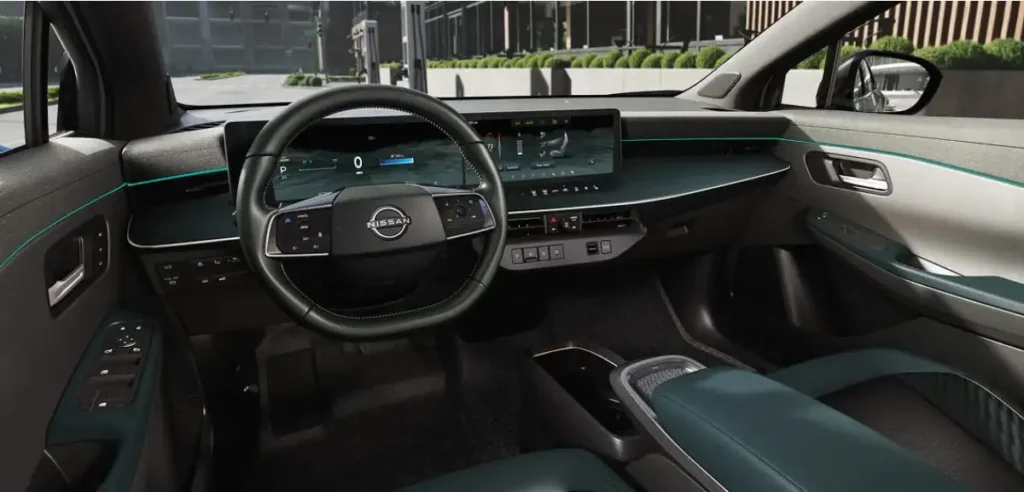
Inside, the 2025 Nissan Leaf is a calm, modern space. Two trim levels are offered per battery size, with the top spec adding massaging seats, head-up display, and high-quality synthetic leather upholstery.
A dual-screen setup runs on Google’s built-in operating system, offering Google Maps, Assistant, and Play Store access for streaming apps and games. It even features an in-car racing game — perfect for long charging stops.
Physical buttons remain for essentials like climate control and drive mode, while heated seats and steering can be pre-set via the companion app.
Rear Space and Practicality
Rear legroom is decent for a compact EV, though taller passengers may find it tight. Child seats fit easily thanks to ISOFIX points and wide-opening doors. The panoramic roof features a switchable shading system that increases headroom and keeps the cabin cool.
The boot holds 437 liters, more than the VW ID.3 and Cupra Born, though it trails the Kia EV3 and Renault Scenic. Two underfloor compartments add convenience, and Nissan cleverly includes storage for charging cables and shopping bags.

Driving Experience and Comfort
On the road, the 2025 Nissan Leaf feels more mature and refined than its predecessor. The ride is smooth, quiet, and predictable — exactly what you want from a family EV.
While it’s not as sharp or engaging as the Kia EV3 or Škoda Elroq, it delivers a relaxed, confident drive. Steering is light in normal mode but gains welcome weight in Sport. Adjustable regenerative braking via steering paddles and Nissan’s classic e-Pedal system allow for true one-pedal driving.
ProPilot adaptive cruise control adds 3D traffic visualization, showing nearby vehicles and adjusting speed accordingly. Safety systems are plentiful, though the alerts can be excessive — luckily, they’re easy to disable with a few button presses.
Power and Performance
Performance varies by model:
- 174 hp (52 kWh)
- 215 hp (75 kWh)
The larger-battery model hits 0–62 mph in 7.6 seconds. While not a sports car, it’s plenty quick for overtakes and motorway merges. Nissan hasn’t ruled out a dual-motor AWD version — so don’t be surprised if that’s on the horizon.
Efficiency and Real-World Results
Nissan claims 4.5 miles/kWh, but early testing showed around 3.7 miles/kWh in mixed conditions — respectable, though below the claim. Warmer weather or extended testing may bring it closer to target.
It’s worth noting that Nissan now presents charging metrics in miles added, not just percentages — a small but smart usability upgrade.
Pricing and Value
This might be the Leaf’s biggest win. UK pricing starts at:
- £33,000 for the 52 kWh
- £36,000 for the 75 kWh
After applying the government grant:
- £29,250 (52 kWh)
- £32,250 (75 kWh)
That’s exceptional value for an EV capable of nearly 400 miles per charge — currently the best range per pound in the UK market.
Warranty coverage is decent:
- 3 years / 60,000 miles (vehicle)
- 8 years / 100,000 miles (battery)
While the car warranty could be longer, the pricing and range easily compensate.
Final Verdict on the 2025 Nissan Leaf
The 2025 Nissan Leaf proves that legends can evolve. It’s not just the car that started the EV movement — it’s now a smart, practical, and surprisingly affordable choice for modern buyers.
It may not handle like a sports EV, but it delivers comfort, refinement, and real-world range that rivals can’t match at this price point. For most drivers, it’s exactly what an electric car should be — simple, efficient, and enjoyable.
For full specs and pricing, visit Nissan UK’s official website.

Pravin is a tech enthusiast and Salesforce developer with deep expertise in AI, mobile gadgets, coding, and automotive technology. At Thoughtsverser, he shares practical insights and research-driven content on the latest tech and innovations shaping our world.